Podcast: Play in new window | Download | Embed
A Tucson, Ariz. resident is facing federal charges for allegedly excavating and trafficking archeological resources from the Gila River Indian Community.
The U.S. Attorney’s Office says 46-year-old Leo Reynoso stands accused of violating the Archeological Resources Protection Act.
Prosecutors said Reynoso allegedly removed several artifacts from the community without authorization. This included jewelry, Indian Trader tokens, crucifixes, and buttons from archeological sites on tribal land.
He also stands accused of selling these items without a permit.
The archeological value of the items is estimated at $29,000, while the cost of repairing the archeological sites is estimated at $23,000.
If convicted, Reynoso faces a $20,000 fine and could get up to two years in prison.
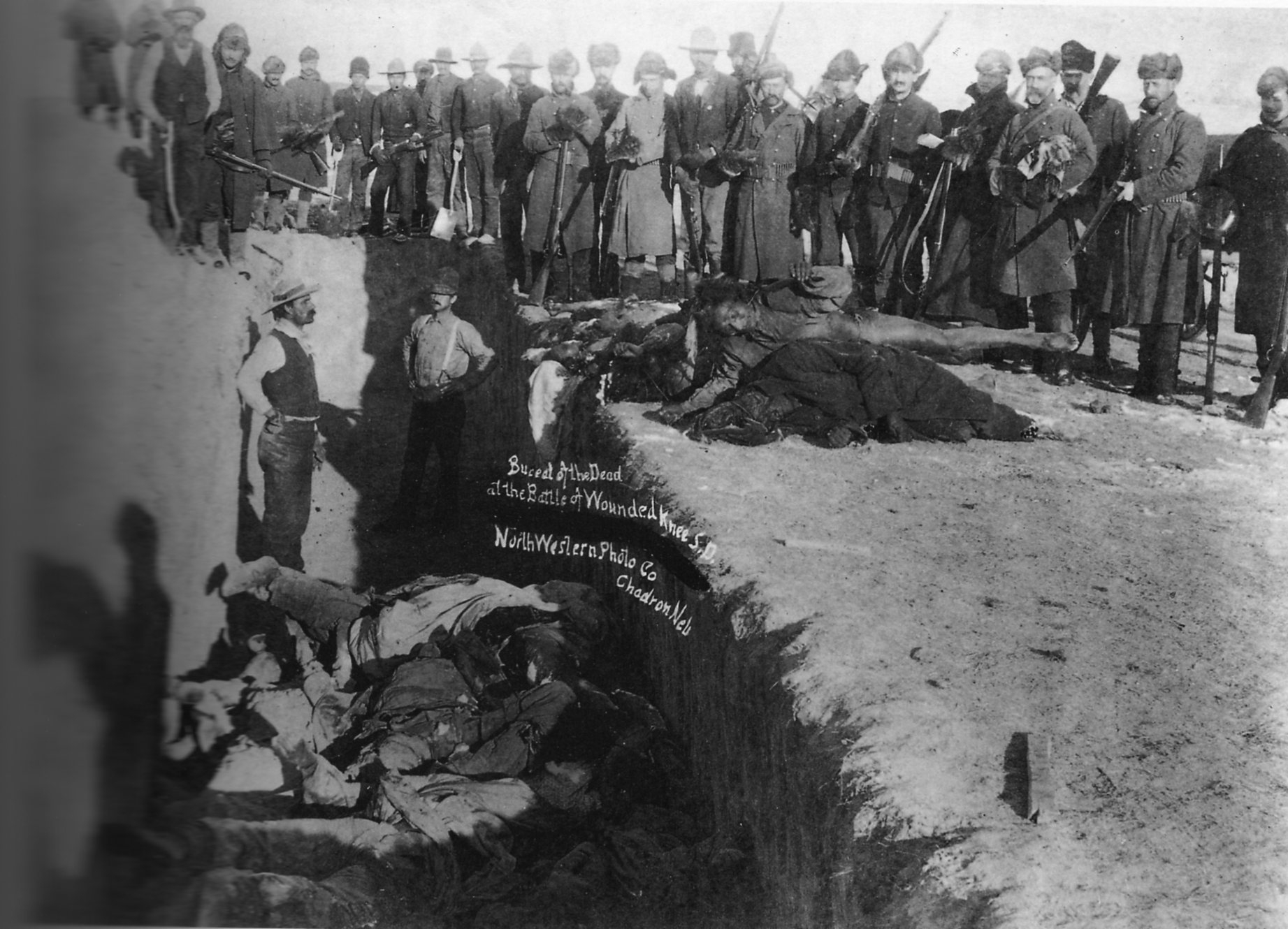
U.S. soldiers at a burial for some of those who were killed at Wounded Knee, S.D. on January 1, 1891.
December 29 will mark 135 years since the Wounded Knee Massacre.
In part two of his story, KJZZ’s Gabriel Pietrorazio shares some Native reactions to Defense Secretary Pete Hegseth’s assertion that the soldiers who took part in the violent and tragic incident deserved their Medals of Honor.
David Martinez (Akimel O’odham) is founder and director of ASU’s Institute for Transborder Indigenous Nations.
“Wherever you see America invading, sending troops, trying to intimidate – all that comes from America’s original attitude towards the so-called frontier, which was regarded as wild, which was regarded as dangerous, which was regarded as full of savages.”
From the Utes across modern-day Utah and Colorado to the Apaches in Arizona and New Mexico, the Army fought over a dozen conflicts predating federal recognition of tribal governments.
“There’s not a tribe anywhere in North America that did not experience deep, historic trauma.”
Even the Bureau of Indian Affairs emerged in 1824 from within the original War Department.
Two centuries later, Martinez suggests it’s fitting that President Donald Trump has restored the agency’s old moniker.
“Well, for me, the Department of War is the true name, because, from my point of view as an Indigenous person, the objective in America’s conquest of Indian Country was to make Indian Country like America. It did so at the expense of Indian land and people. And so the reservation system that we see around us today, which includes my people, Akimel O’odham, is a product of war.”
Lakota attorney Chase Iron Eyes calls the reservations prison camps.
“There are those of us who never perceived an end of war. If you look at what the reservation system is, it’s not peace, prosperity, and privilege for Native people; it’s a little open-air prison camp.”
For Iron Eyes, who runs the Lakota People’s Law Project, Wounded Knee is deeply personal.
“As the great-great grandson of people who were killed at Wounded Knee, nobody in their right mind takes pride in the slaughtering of non-combatants – women and children.”
Marlis Afraid of Hawk grew up hearing horror stories from her grandfather, Richard, who was only 13 when he survived Wounded Knee.
The 68-year-old Oglala Lakota elder insists Sec. Hegseth is wrong.
“He’s in denial, look it up. But he’s not going to.”
Get National Native News delivered to your inbox daily. Sign up for our daily newsletter today.
Download our NV1 Android or iOs App for breaking news alerts.
Check out the latest episode of Native America Calling